Someone is asking five figures for a 1972 double die cent just like the one you think you have, so you decide to give yours that little extra shine. Here is the most important advice we can give in preparing your collection for sale:
Do not attempt in any way to “improve” the condition of old coins, jewelry, art, or any collectibles or antiques you wish to appraise and sell. The odds of doing damage far outweigh the chance you’ll add value.
You don’t do your own dentistry, right? We are professionals with a background in and professional restoration, We’ve been trained in the conservation–the process of halting environmental damage an storing things properly–and restoration, an attempt to return them to a more original state.
A client recently attempted to clean a high-grade 1884-S Morgan dollar worth over $7,000. He rendered it to a $55 disc of scrap metal using a commercial coin cleaning product he had found on the Internet. Handle things as little as possible. A single fingerprint can erase 90% of the value of a mirror-like proof coin.
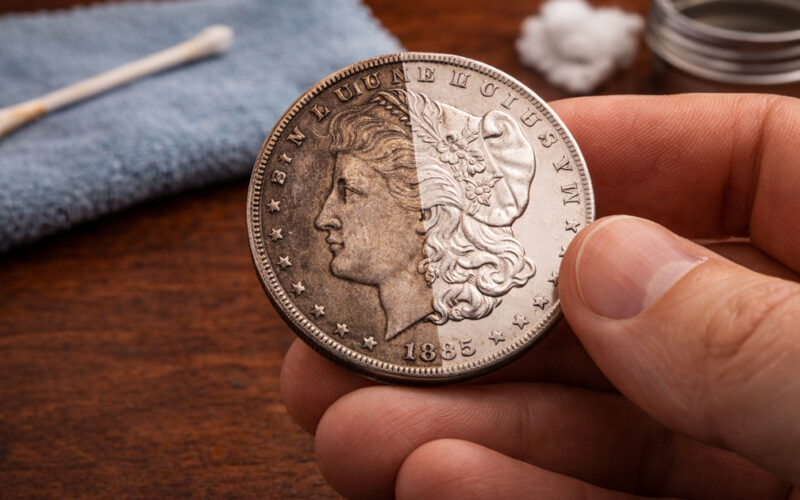
Coins are created when a hardened die strikes a metal disc called a “planchet.” As this happens, the metal flows outward toward the edges giving it microscopic flow lines that translate to what is called “cartwheel luster.” Over time the coin reacts with nonmetals in the atmosphere and develops color, or “toning.” A little gold, gray, or rainbow hue may be desirable.
When WE conserve coins, we attempt to carefully remove the dirt and grease off the surface of the coin, without damaging that layer of oxidation. All abrasive scrubbing and reactive cleaning products serve to compromise the appearance of a coin, overriding those authentic features. Consequently, even a light cleaning can remove original surfaces that collectors and professionals rely on to determine authenticity and condition. Once those surfaces are altered, the value can drop significantly — sometimes to a fraction of what it was. And nothing can be done to reverse the damage.
To summarize:
- Minimize handling. Gentle sorting by denomination is the most we recommend.
- Store coins in a cool, dry, dark, and even environment.
- Keep items in their original holders or containers.
- Some coins are in original or secondary holders that may not meet archival standards. Many plastic flips and albums from the 1960-1990s leech out chemicals that cause what is known as “PVC damage.” If you see your coins turning brown or green, or developing a sticky residue on the surface, seek out PROFESSIONAL assistance in transferring and conserving them.
- If something needs conservation, it should be done by professionals with the proper training and materials.
- If you’re unsure about anything you have, it’s always better to ask before taking action. A quick look can prevent a costly mistake.
If you’d like help understanding your collection or preparing items for appraisal or sale, we’re always available.
— Marc Alan Rosner
Hudson Valley Numismatics