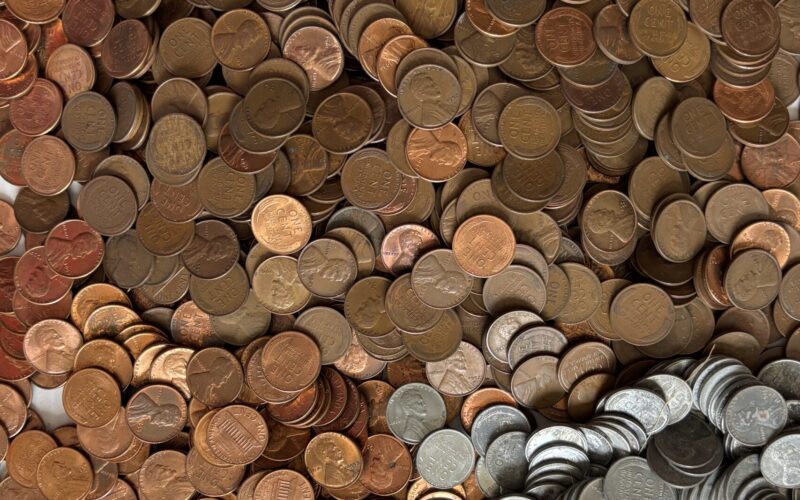
“I found a silver penny from 1943” – Sorry, not silver, but steel.
“I have pennies from the 1910s, they must be worth a lot” – There are a lot more wheat cents out there than you might imagine, in good condition, it may be worth a few cents.
“I have a penny from 2009 with a different back” – There were four different reverse designs that year to celebrate Lincoln’s 200th birthday.
These are some common things we hear from people who think they just found a rare and valuable coin. We spend a lot of time educating people on the one cent coin so hopefully this helps and you’ll get a little history too.
Brief History of the One Cent Coin
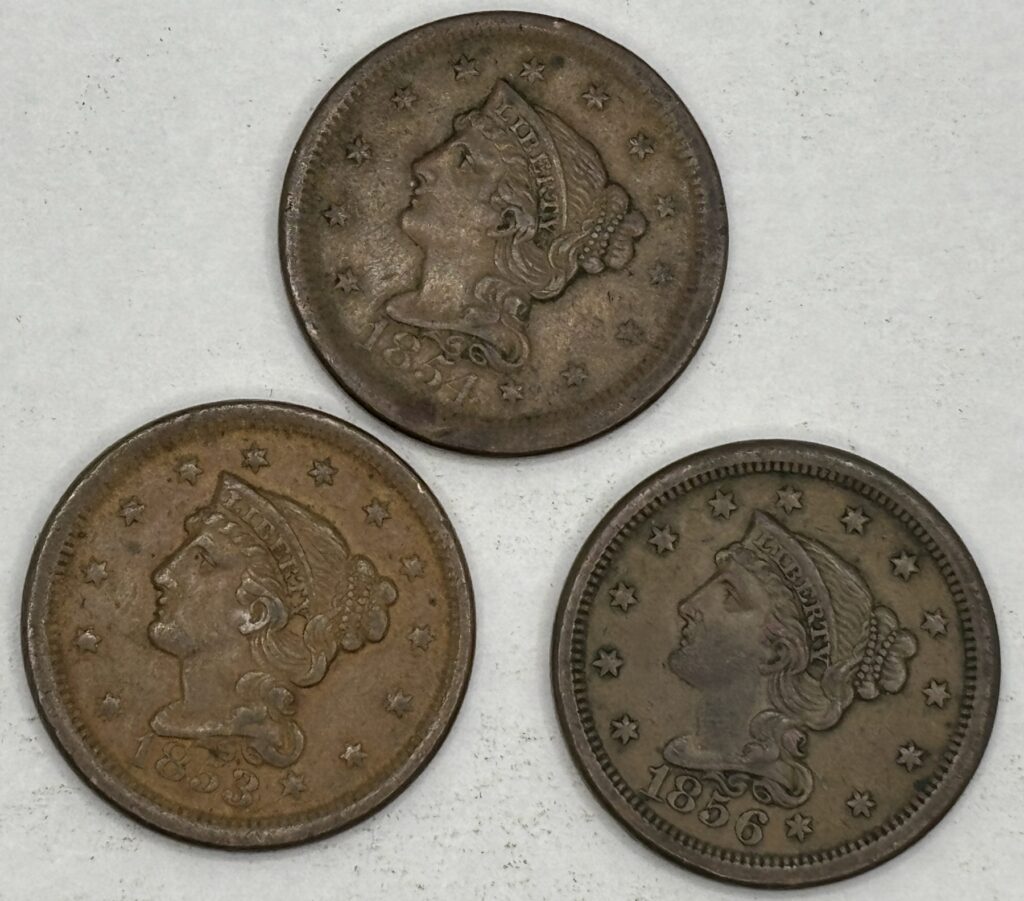
The one cent coin goes back to 1793 when the U.S. Mint began production of a one cent coin that was popularly called the penny. It was one of the first coins made by the U.S. Mint after its establishment in 1792. This first one cent coin was a large, pure copper coin depicting a woman with flowing hair symbolizing liberty. The one cent coin went through many composition, design, and size changes over its 230 plus years, many of those just in this century. The “Large Cent” eventually gave way to the small cent which is the focus of this article.
A Note on Lady Liberty
The face of Lady Liberty (not the Statue of Liberty) appeared on many designs and denominations of circulating coins for over 150 years. Congress debated on early coin designs and considered featuring George Washington and other presidents. However, there was strong belief that putting a current president on a coin was too similar to Great Britain’s coins which featured their monarchs. So, Congress opted to personify the concept of liberty. Remember, the Revolutionary War ended in 1783, and the U.S. was a young country establishing its independence from England.
The Small Cent
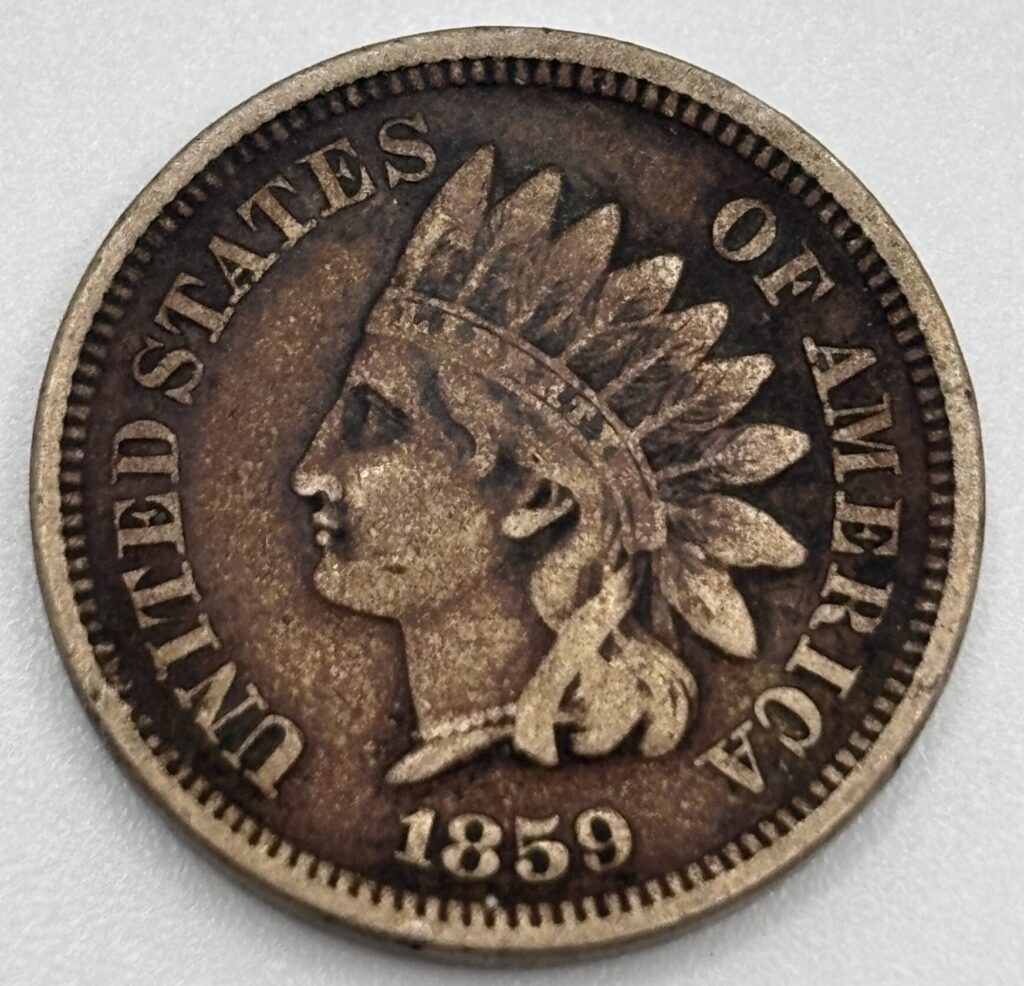
In 1857, after over 60 years, the one cent coin had a major change – the size, composition, and design were all new. A flying eagle was featured on the obverse of the new one cent coin, the composition changed from pure copper to 88% copper and 12% nickel, and it was much smaller. The Flying Eagle had a short tenure; it is one of the shortest-lived designs (not counting coins specifically designed for a one-year life span). It was replaced by the “Indian Head” design in 1859. Despite the name, the obverse design featured a profile of Liberty wearing a Native American headdress, not a real Native American. These two designs are worth more than a cent, possibly a few dollars depending on year, mint and condition.
The Lincoln Cent
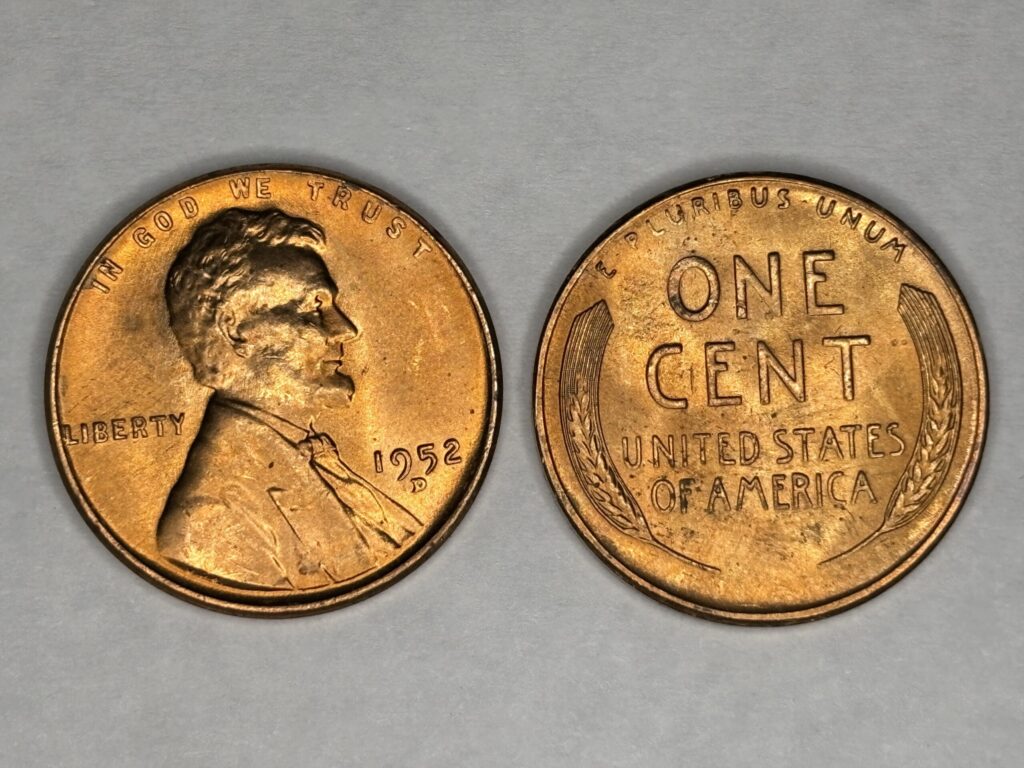
By the early 1900s, there was acceptance of putting deceased leaders on circulating coins and currency to honor them. In 1909, Abraham Lincoln became the face of the penny until production ended in 2025. Honest Abe was the first President featured on a U.S. coin in honor of his 100th birthday. The iconic image of Lincoln was designed by Victor David Brenner and was on the penny until it stopped production. The reverse featured two sheaves of wheat from 1909 to 1958, hence the name “Wheat Penny”.
The 1909 VDB and Other Key Dates
You may find a 1909 penny (no mint mark which means Philadelphia) with the initials VDB on the bottom of the reverse, it carries a slight premium, there were millions made. However, if you have a 1909 with an S mint mark, that is considered a key date and can be valuable depending on condition. Lincoln cent collections are typically missing this and a few other key dates such as the 1909-S (no VDB), 1914-D, and 1931-S.
The War Years – 1943 Steel Cents
During World War II copper was needed for the war effort so the composition changed to zinc-coated steel. The cents minted in 1943 are referred to as “Steel Cents”. If you find a penny from from 1943, sorry, it is not silver. A limited number of copper pennies were struck by mistake in early 1943 but there are probably more fakes out there than original minted pennies. How can you tell? The steel cent is the only U.S. coin that sticks to a magnet. If your 1943 penny is copper colored, grab a magnet and if it sticks, it’s a fake.
The 1955 Doubled Die Obverse
This error is one of the most dramatic of all error coins. The doubling of 1955 on coins minted in Philadelphia (no mint mark) is visible without magnification. It is estimated that about 24,000 made it into circulation. Depending on condition, this coin can be worth over $1,000. Due to the potential for a big payday, there are counterfeits out there. Before you go rifling through the jar of pennies that has been sitting on dresser for years, know that coin collectors have been on the hunt for this coin since it was minted and the odds of finding one in loose change are slim, but hey, you never know.
Wheat Cent to the Memorial Reverse
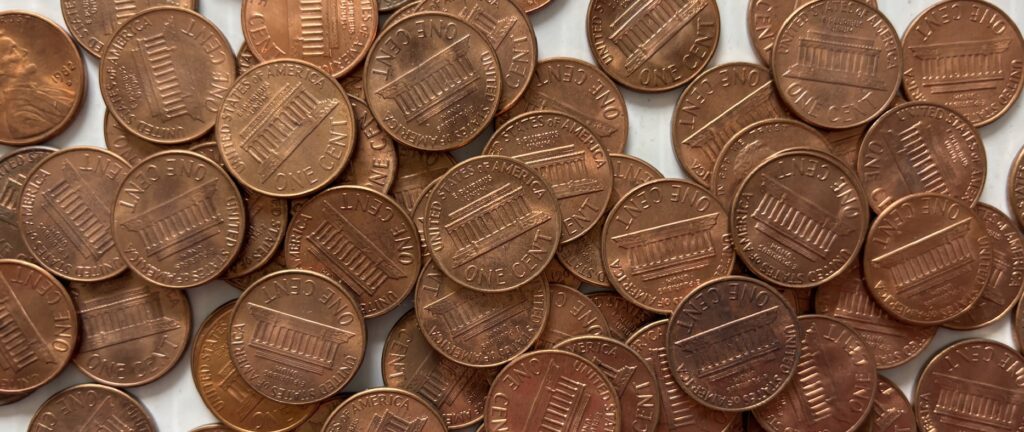
In 1959, to commemorate Lincoln’s 150th birthday, the reverse was changed to an image of the Lincoln Memorial designed by Frank Gasparro. Side note of interest, the Memorial was completed in 1922.
From Copper to Zinc in 1982
In 1982, the U.S. Mint changed the composition from 95% copper to copper-plated zinc and changed from a large date to a small date midyear. There are seven official business-strike circulation varieties in 1982 but that is a discussion for another time. Most pennies from 1982 are just worth one cent. There are collectors out there looking for varieties, but it needs to be in nearly uncirculated condition to be more than face value. How do you tell it its copper or zinc? The weight is different.
2009 Lincoln Bicentennial One Cent Program
The next major change was to honor the 100th anniversary of the Lincoln Cent and Lincoln’s 200th birthday. Four different pennies were issued as part of the Lincoln Bicentennial One Cent Program. The obverse was the same, but each penny had a different theme on the reverse representing four major aspects of his life. If your 2009 penny looks odd, it’s not a funny-looking Lincoln Memorial or some rare fluke in the minting process. You can find images of these pennies on the U.S. Mint website.
The Shield Cent – The Final Circulating Lincoln Cent Design
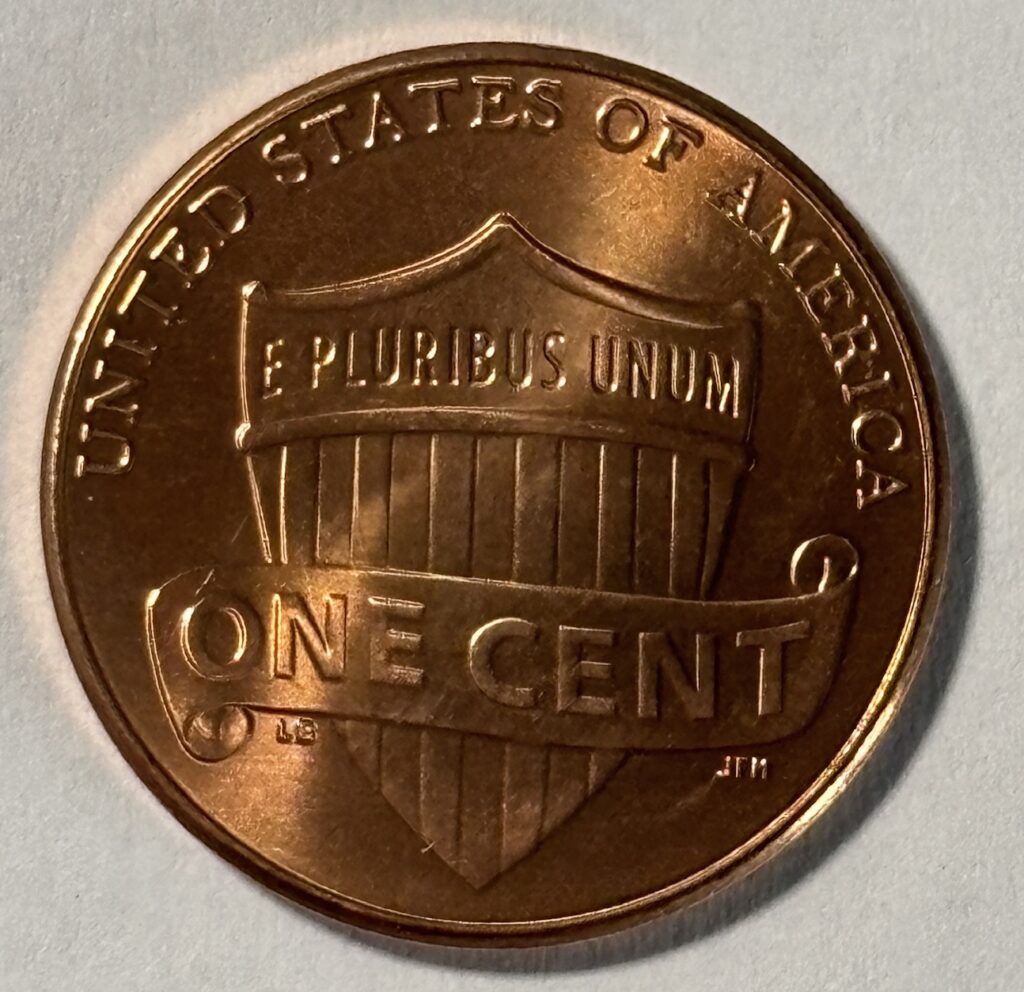
In 2010, the reverse design was changed to the Union Shield. The design was chosen to represent Lincoln’s preservation of the United States as a single country during his tenure as President during the Civil War.
In 2025, production of the circulating penny ended. If it comes up at trivia night, the obverse design of the penny featuring Abraham Lincoln is the longest running unchanged design of U.S. Coins.
In 2026, the design remained the same, except for the historic dual-date 1776–2026. Don’t go hunting for these in change, they are only available in special sets from the U.S. Mint.
Color – Is it Red, Red Brown or Brown? And does it matter?
A quick note on color since we get a lot of submissions of nice shiny red cents. Collectors and grading companies use the terms red, red brown and brown. You will see those designations on graded coins. If you have pennies that are bright red naturally, not from cleaning, they can be worth a little more but not much more unless it is a key date. Uncirculated cents in rolls that came from the bank in 1952 and are still red will fetch a bit more than the roll you put together from your change jar.
Still Have Questions, Contact Us
This is not intended to be a comprehensive discussion of one cent coins but a high-level overview to answer many of the questions we get. You can find more about value in our article What Are My (Rare?) Coins Worth? If after reading these two articles you still have a question or you think you have a coin of exceptional value, contact us. If you have jars and rolls of old wheat cents or collector albums, we can help you with that too.